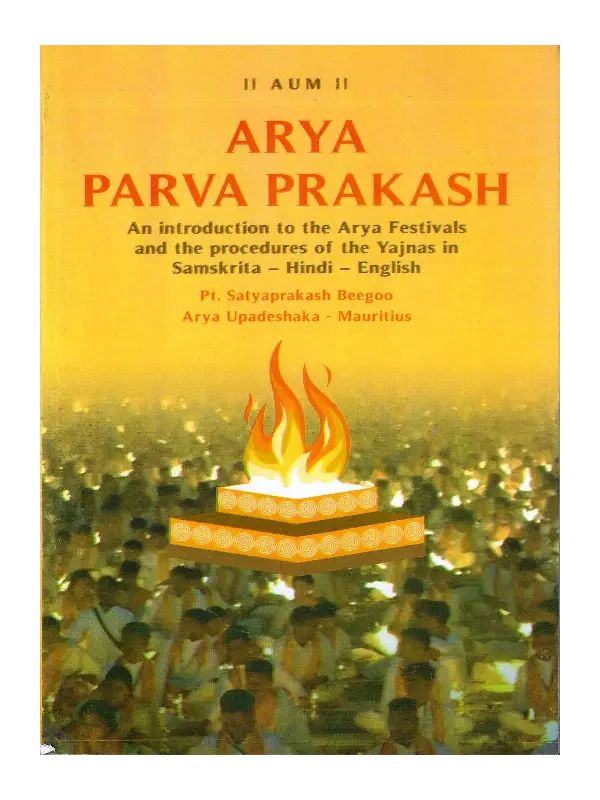
ARYA PARVA PRAKASH
Festivals are known as Parva. The term Parva is a Vedic word.
It is derived from the root Pri Pooranayo, and the three important meanings are:
that which inspires
that which makes us rejoice
that which fills or completes our life
with gaiety and enthusiasm
Another term for Parva is Utsava. Utsava means that which brings cheerfulness in life. The Hindi word for festival is Tyohära. It appears that this term is a combination of two words; Tithi and Vära (tithi-date, Vära-day).
Parvas are in fact domestic special observances-that is activities which are different from the daily routines. Another name for Parva is Sandhi. Sandhi means junction, joint, or that which connects. It is observed that most of the important Parvas are celebrated when comes the meeting period of two natural phenomena particularly when occurs the transition period from one season to another one.
Similarly, the daily Yajnas – Samdhya and Agnihotra are performed at the conjuncture of the night and the day in the morning and the day and the night in the evening that is at the Sandhi time of these occurrences. Thus, the Tithi-dates are fixed for the Parvas. For example, Holi is celebrated on Poornima, and Deepavali on Amavasyä.
Shrävani Upäkarma is celebrated on Poornima etc. The preparations for the celebrations of some Parvas usually start one or two days earlier than the fixed Tithi and in some cases the festive activities last for some more days. Some of the Parvas are also celebrated collectively at regional, or community level. In is this book, an attempt has been made to disclose the origin of the Arya Parvas and underline their importance and purpose in life.

Reviews
There are no reviews yet.